Codemasters' manager is built for speed rather than depth: big coloured buttons, a handful of short menus and very little reading. The commentary over the highlights uses real names, so a Liverpool move comes out as Whelan down the line and back to Redknapp.
What it does differently
The team talk is the highlight, and it is not subtle. Before kick-off the advice runs from playing football and avoiding all tackles to tackling hard and, at the far end, an instruction to kick the opposition about with the swearing printed as symbols. At half time the options range from telling the lads they are doing fine to informing them that they are supposed to be professionals and should play like it. Hatchet Man sits on the same menu and can only be ordered before a match, which tells you most of what you need to know about it.
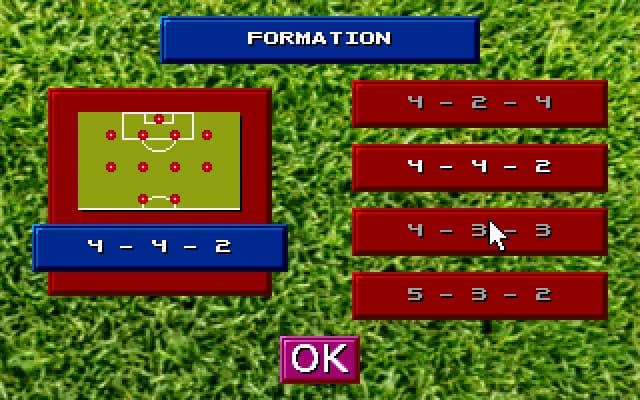
Elsewhere the choices are few and clearly labelled: four formations, a tactic that runs from total defence to all-out attack, and a choice between the wings, the middle or passing it about everywhere. The finance screen is one panel of weekly costs, players' wages, staff, utilities and rates, set against the balance; Everton started ours with a million pounds. During matches a presenter with a microphone stands beside the scoreline.
Where it shows its age
There is not much underneath. Two substitutes, four shapes and players rated only for goalkeeping, defending, midfield, attacking and energy make up the whole football model, and buying a player comes down to entering a price range and making an offer. Press Enter on the title screen; after that everything is done with the mouse. The original's code-card check and sound set-up screen have been taken out of this copy, so it starts straight at the title.
Worth playing?
For a quick, cheerful season with real names, yes. For a manager you can live in, Premier Manager 2 was doing far more in the same years.