
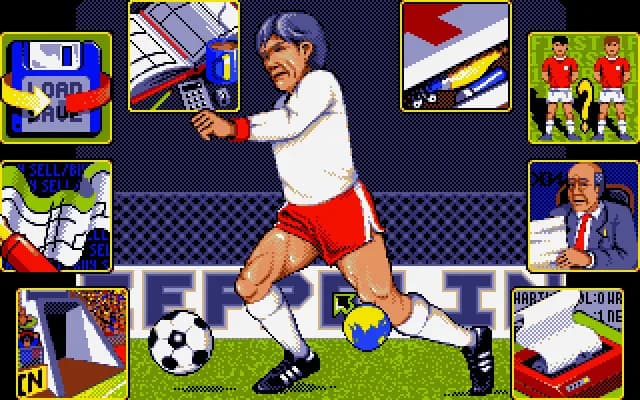
A budget manager built to a budget brief: one screen of picture icons for the bank, the chairman, the transfer market, team selection and the tunnel out to the next match, and very little behind any of them. That plainness is the point of it, and also its limit.
What it does differently
Before every match the scout hands you a single card on the opposition, their defence, midfield and attack each rated between terrible and excellent, plus the state of the pitch. Our first opponents, Gateshead, had a terrible defence and a poor everything else, which is about the right welcome to the Conference. The same screen lets you switch the highlights off.
The money side is a conversation with the bank. You can ask for a bigger overdraft, the bank can say no, and when the results go the chairman counts down in plain words: lose two more games and you are sacked, then one more. Selling is done by offer, with buttons to accept, reject or haggle, and the transfer market warns you three weeks before it shuts. The clubs are real and the footballers invented, so the squad you inherit means nothing to you until you have watched it lose.
Where it shows its age
Click into the game window first so that it captures the mouse; without that the pointer lands well off what you meant to hit. Clubs are chosen by stepping through the list one at a time with two arrows. And there is not much football to decide: players are rated for ability and fitness and nothing else, and once you have picked eleven and two substitutes the tactical side is done.
Worth playing?
For an evening, yes; it is quick to learn and the climb from the Conference gives it a shape. For the same climb with a club to run around it, Premier Manager is the obvious next step, and Match of the Day: Bundesliga shows what Zeppelin did when it gave a manager more room.