
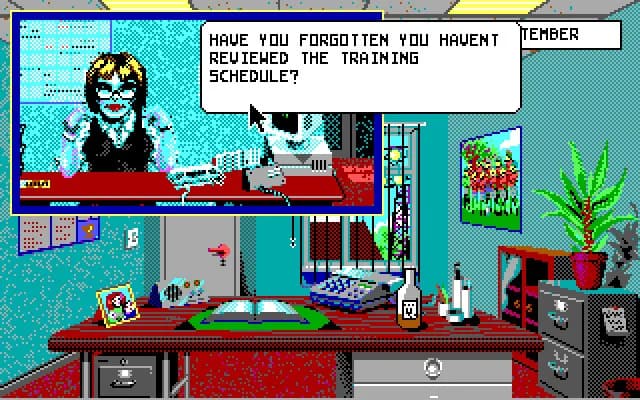
The manual promises a detailed simulation of one of the toughest jobs imaginable, then spends most of its pages on the office: the diary, the phone, the intercom, the filing cabinet, and a whisky bottle on the desk that it advises you to open with care. Built by Matrix Developments for CDS, this is a game about a manager's week more than his matches.
What it does differently
Time. The week is a run of days with a clock on the wall, and the diary lists what must be done: the Monday board meeting, the training schedules, the tactics meeting and picking the side. Everything else competes for the hours that are left. The board meeting is mostly you listening while the chairman says unpleasant things, and what you tell the newspapers by phone comes back as a headline that may not be what you meant.
Training is set in hours per player across shooting, dribbling and tackling, up to twenty a week, and tactics come from a playbook of sixteen plays, five at a time: a sweeper who runs at the opposition, full backs down the flanks, defenders who mark space. The squads use real names; Arsenal's file opens with Lukic and Adams.
Where it shows its age
It is mouse only, and the mouse has to be captured with a click in the game window; right-click backs out of menus. Every start asks you to insert the correct graphics disk, which any key answers, and then to pick one of five languages. Typing new club names into the rename box was unreliable when we tried it.
Worth playing?
For the week rather than the football, yes. It is one of the earliest games here to make the office itself the interface, years before Ultimate Soccer Manager walked you between rooms. Start on level one, where there are no injuries and no midweek games, and learn the office before the phone starts ringing.