The third Football Manager arrived when the genre had already moved on, and it tries to catch up by giving you a room to work in. The office is the menu: point at the diary, the filing cabinet or the phone and its name appears at the bottom of the screen, and going out through the door ends the day.
What it does differently
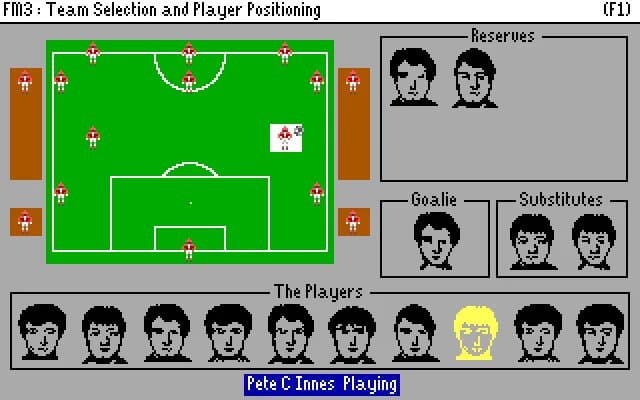
Training is the heart of it. Each player has a screen of bars, red for the level you want him to reach and blue for where he is, and a rest bar that shrinks as you ask for more. Push too hard and he gets injured; leave him alone and the skills drift back down. Positions are just as hands-on: you place each man on a pitch diagram, and a player out on the touchline plays as a winger.
The accounts are unforgiving. If the balance is over the overdraft limit at close of business on any day, the game is over, and the game-over messages name the bills that can do it, from the weekly payroll to the monthly prizes for the club lottery. Transfers are haggled in short lines of prose; one player weighing up a move, the game notes, is not a man noted for swift decisions.
Where it shows its age
Two things to know before you start: the game needs a click inside the window to capture the mouse, as the pointer does not move its cursor otherwise, and every start opens with a box asking for English or Deutsche. After that the office is charming once and slow ever after, and going through the door on a match day without eleven men and two substitutes in place is another way to end the game.
Worth playing?
As the last of the line, yes; the training screen is the most interesting thing in it. For the series at its most playable, Football Manager 2 is quicker to get into and easier to like.