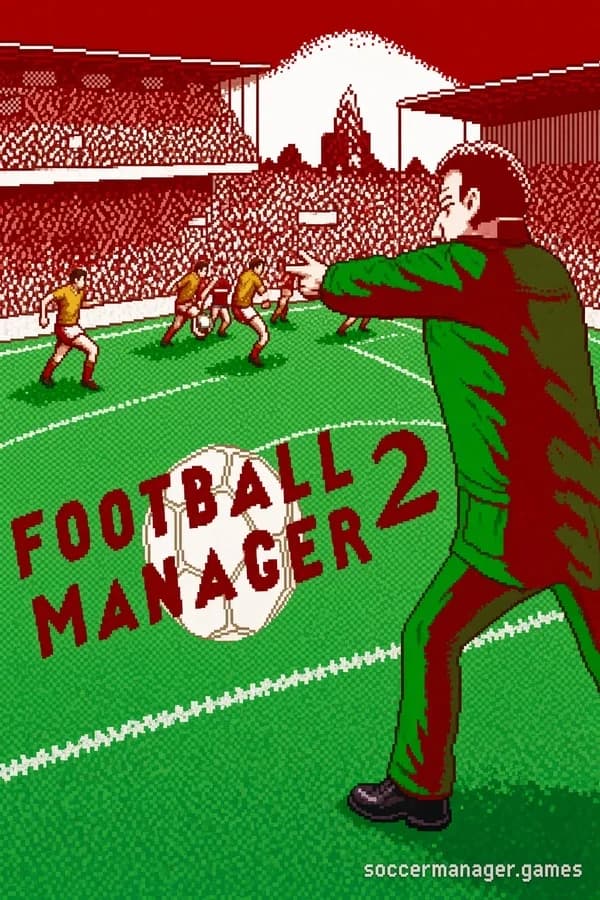
Kevin Toms's sequel was written in machine code by several hands and went to number one in the Gallup chart in the summer of 1988. It is the point where the man who started the genre caught up with the games his first one had inspired.
What it does differently
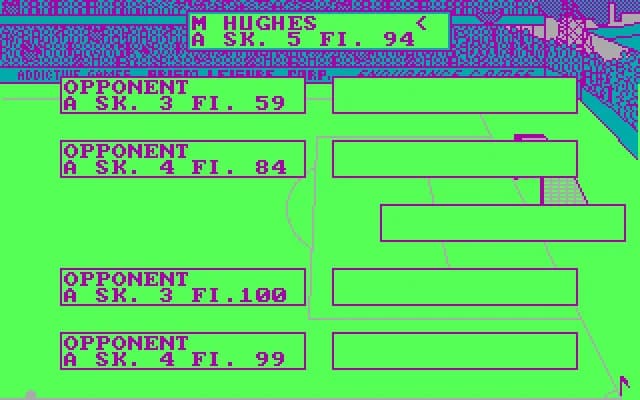
A match is a set of duels. The team screen is laid over the pitch in three slices, and whoever you put in a slot marks the opponent in the slot beside him. In each half every pair is compared, skill against skill with some luck stirred in, and where one man clearly wins, an attack starts at his feet. Picking a side is therefore a matching exercise: your best defender on their best forward, a spare man where they are thin. Anyone out of position plays as a skill of 2, on a scale that otherwise runs from 3 to 9.
Extra training sets how high and how far the team passes, and the difference shows in the highlights.
Where it shows its age
Whichever club you pick, you start in Division Four with a squad of made-up players, so choosing Liverpool buys the name and nothing more. You meet each club in your division once, and the opposition is never named: every rival is just OPPONENT, with a position, a skill and a fitness figure.
Everything is done with up, down, left, right and fire, the mouse included: moving it up and down walks a marker between NO and YES, and a click is fire. Clubs are offered one at a time with a yes-or-no question, so finding yours takes some clicking.
Worth playing?
For an evening, yes, mostly for the marking screen, which is a genuinely different idea of what a match is. As a career it is thin. The series went on to Football Manager: World Cup Edition 1990 and later to Football Manager 3, which lets you start in any division.