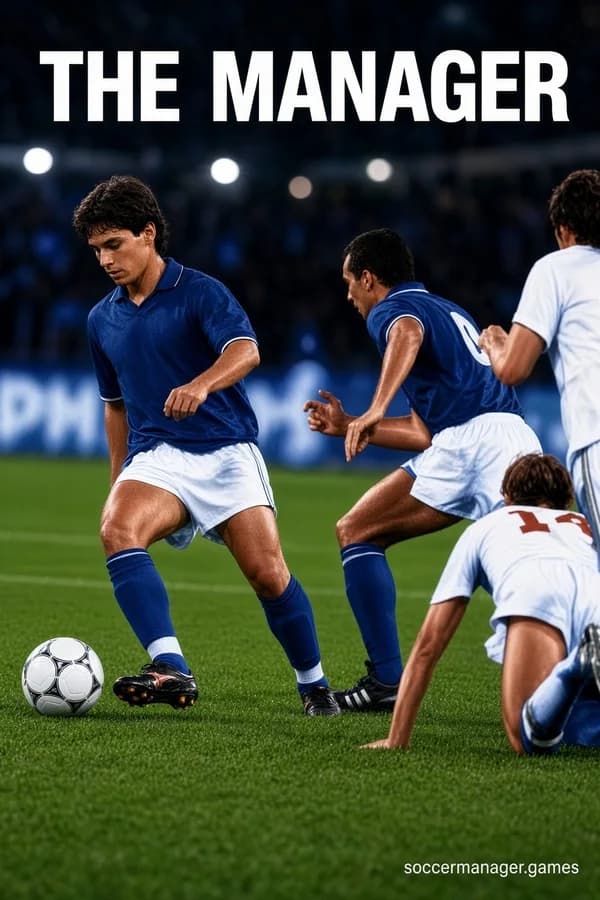
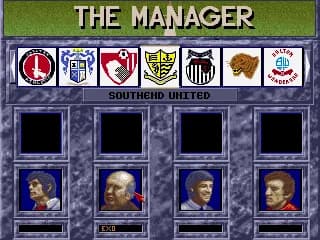
The Manager has a handsome desk for 1992: VGA screens, club crests on the selection screen, a calendar that turns over, and a tabloid sports page after every match. It is also a translation, and the seams show here and there.
What it does differently
It shows you the sums. On matchday the running scores for every division list each club's league position and a strength rating with three figures in brackets behind it, so you can see why the favourites are favourites. Your own match is a stadium picture with counters for cards, injuries and chances ticking up, and the paper reports it afterwards with a mark for each of your players and a headline. Ours, after Liverpool lost at Bournemouth, read "Liverpool despaired of defence by Bournemouth".
Before the first season everyone is asked whether they would like to attend a spectacular draw for each cup, and you choose whether the game runs for one season, three or indefinitely. Debts are punished with relegation rather than the sack, and your scouts, the game insists, work only on English soil.
Where it shows its age
Left click selects and right click confirms, and both the manager screen and the settings box wait for a right click that nothing tells you about. The calendar on the desk is what moves the game on. The program still holds a block of German match-report sentences beside the English ones; we only ever saw English, but a stray German line in a newspaper would not be a surprise. Saving opens a file browser on drive C: and writes a .MAN file there.
Worth playing?
If the stadium half of the job is what you enjoy, yes: a standing ground with no floodlights is a good place to start building. For the same climb in English hands, Premier Manager starts you in the Conference with a crumbling ground; for the club as a business, Ultimate Soccer Manager goes further.